


Summary
- The World Bank is preparing a massive financial response to support countries affected by the ongoing Middle East conflict.
- The war has already begun to impact global growth and inflation.
- The IMF has also lowered its global growth forecast, warning that the conflict is pushing up inflation.
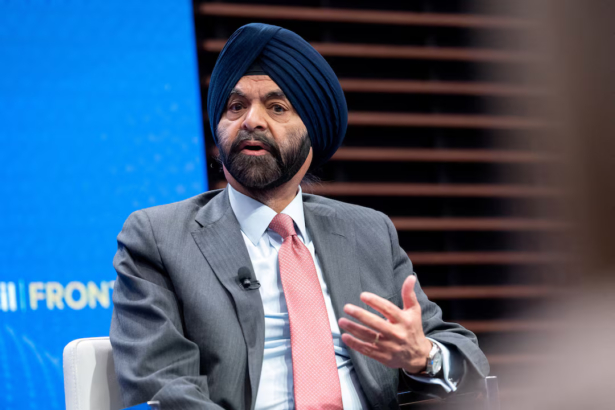
The World Bank is preparing a massive financial response to support countries affected by the ongoing Middle East conflict. Its president, Ajay Banga, said the institution could mobilize between $80 billion and $100 billion over the next 15 months.
Banga explained that an initial $20 billion to $25 billion could be made available in the coming months. This would be done through a crisis response window, allowing countries to access a portion of previously approved funds earlier than scheduled.
He added that another $30 billion to $40 billion could be arranged within about six months by restructuring and repurposing existing financial programs. If the conflict continues or worsens, the bank may tap additional resources from its balance sheet to expand support further.
The announcement came during the spring meetings of the International Monetary Fund and the World Bank, where global economic risks linked to the war were a key focus.
Banga said the aim is to create a flexible financial toolkit that can respond to different levels of crisis. He stressed the need for strong and timely support to reduce the economic damage caused by the conflict.
The war has already begun to impact global growth and inflation. Developing countries are expected to suffer the most due to rising energy costs and supply disruptions.
The IMF has also lowered its global growth forecast, warning that the conflict is pushing up inflation. Without the war, global growth projections would have improved slightly.
IMF Managing Director Kristalina Georgieva said the global economy could recover quickly if the conflict ends soon. However, she warned that a prolonged war, especially into the summer, would worsen economic conditions.
She added that the IMF is in talks with affected countries to assess their financial needs amid rising fuel prices and supply chain challenges.
Both Banga and Georgieva urged governments to take targeted and temporary measures to ease the burden of high energy costs. They cautioned against broad subsidies, warning such steps could fuel inflation further.
We welcome your contributions! Submit your blogs, opinion pieces, press releases, news story pitches, and news features to opinion@minutemirror.com.pk and minutemirrormail@gmail.com