

Summary
- China is increasingly amplifying voices from within Taiwan as part of a growing information warfare strategy aimed at shaping public opinion and weakening support for the ruling government, according to security officials and research data.
- The campaign reportedly uses clips of Taiwanese politicians, influencers, and opposition figures who criticize the ruling Democratic Progressive Party (DPP).
- Taiwanese officials say the objective is to weaken public confidence in the government and discourage increased defense spending.
China is increasingly amplifying voices from within Taiwan as part of a growing information warfare strategy aimed at shaping public opinion and weakening support for the ruling government, according to security officials and research data.
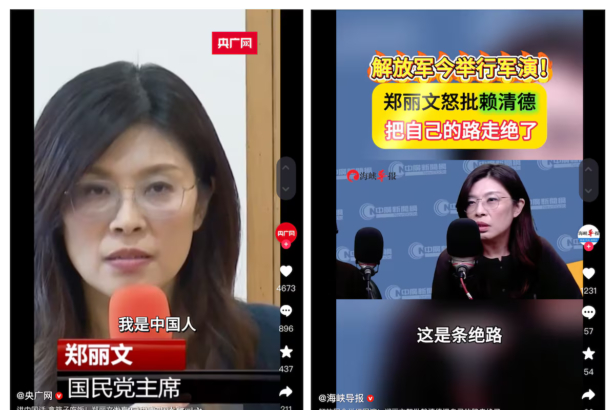
The campaign reportedly uses clips of Taiwanese politicians, influencers, and opposition figures who criticize the ruling Democratic Progressive Party (DPP). These videos are first circulated by Chinese state-linked media on platforms such as Douyin, and then reshared across global platforms including Facebook, YouTube, and TikTok.
Analysts say the strategy relies on familiar local voices to make messaging more persuasive. By highlighting internal criticism, Beijing aims to undermine trust in the DPP government and its president Lai Ching-te, especially on issues related to cross-strait relations and defense policy.
Data from the Taiwan Information Environment Research Center (IORG) shows a sharp rise in such content in late 2025. Thousands of videos reportedly featured Taiwanese figures, including members of the opposition Kuomintang (KMT), with some clips gaining millions of interactions online.
One of the most frequently featured figures is KMT chairperson Cheng Li-wun, whose statements criticizing the DPP have been widely repackaged and circulated by Chinese media outlets. Beijing has also highlighted comments from other politicians, influencers, and retired military officers who are critical of Taiwan’s leadership and defense policies.
Taiwanese officials say the objective is to weaken public confidence in the government and discourage increased defense spending. The ruling party has proposed major military budget expansions, which China’s messaging reportedly seeks to portray as unnecessary or futile.
In response, Taiwan’s government has strengthened media literacy programs and psychological resilience training within its armed forces and public institutions. Officials emphasize that public opinion should not be shaped by foreign propaganda.
The administration of President Lai Ching-te has reiterated that peace in the region must be based on strength rather than political concessions. It continues to reject Beijing’s sovereignty claims over Taiwan, maintaining that the island operates as an independent political entity.
China, meanwhile, continues to assert that Taiwan is part of its territory and has not ruled out the use of force for reunification. Beijing has declined to comment on the latest allegations of coordinated information operations.
Experts say the campaign reflects a broader shift toward “cognitive warfare,” where influence over perception is considered as important as military power. While its direct impact on public opinion remains debated, analysts warn it is designed to deepen internal divisions and erode long-term resistance.
We welcome your contributions! Submit your blogs, opinion pieces, press releases, news story pitches, and news features to opinion@minutemirror.com.pk and minutemirrormail@gmail.com