
Summary
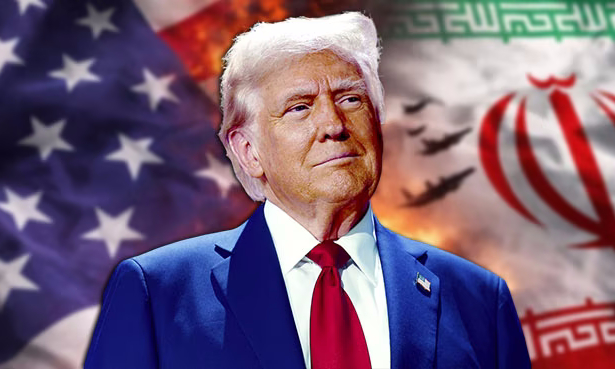
- A major development unfolded in the ongoing Middle East crisis involving the United States, Israel, and Iran, as Tehran announced the reopening of the strategically vital Strait of Hormuz for commercial shipping.
- According to Iranian officials, all commercial vessels including those from the United States are now permitted to pass through the Strait of Hormuz.
- The Strait of Hormuz remains one of the world’s most critical oil transit routes, and its reopening is seen as a significant step toward stabilizing global energy markets and reducing geopolitical risk.
A major development unfolded in the ongoing Middle East crisis involving the United States, Israel, and Iran, as Tehran announced the reopening of the strategically vital Strait of Hormuz for commercial shipping.
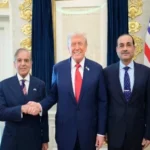
U.S. President Donald Trump welcomed the move and thanked Pakistan, including the prime minister and military leadership, for playing a key role in mediation efforts that helped de-escalate tensions.
Iran also acknowledged Pakistan’s “effective role” in facilitating dialogue, signaling a rare moment of diplomatic convergence amid heightened regional conflict.
According to Iranian officials, all commercial vessels including those from the United States are now permitted to pass through the Strait of Hormuz. However, transit must be coordinated with the Islamic Revolutionary Guard Corps, and ships will be restricted to designated safe lanes.
Despite the reopening, Iran has maintained that military vessels are still prohibited from transiting the waterway, a stance reinforced by statements aired on state television.
President Trump further claimed that Iran has agreed to never close the Strait again and is currently removing sea mines with U.S. assistance. He also confirmed that the U.S. naval blockade in the region would remain in place.
In a separate development, Trump stated that Israel would halt its bombing campaign in Lebanon, adding that Washington had intervened to stop further escalation.
The easing of tensions had an immediate impact on global markets, with oil prices dropping sharply. Brent crude fell by nearly 9%, while U.S. West Texas Intermediate crude declined by over 9%, following Iran’s announcement.
The Strait of Hormuz remains one of the world’s most critical oil transit routes, and its reopening is seen as a significant step toward stabilizing global energy markets and reducing geopolitical risk.
While diplomatic progress appears underway, the situation remains fragile, with military restrictions and ongoing strategic concerns continuing to shape the region’s security landscape.
We welcome your contributions! Submit your blogs, opinion pieces, press releases, news story pitches, and news features to opinion@minutemirror.com.pk and minutemirrormail@gmail.com