
Summary
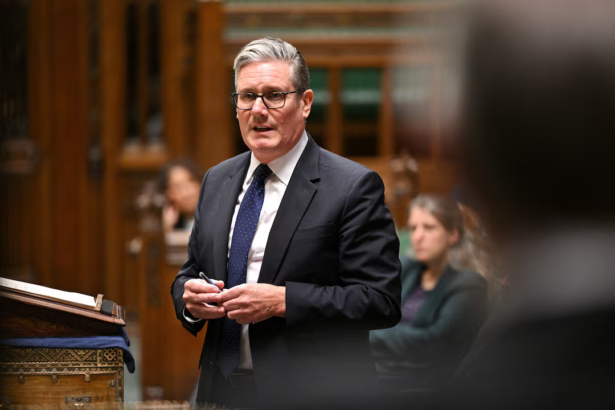
- Prime Minister Keir Starmer faced a stormy session in parliament on Monday as lawmakers pressed him over the appointment of veteran Labour figure Peter Mandelson as ambassador to the United States, despite Mandelson failing a security vetting process.
- Starmer apologized for the appointment at the time, but the government admitted last week that Mandelson had failed vetting before taking up the role in February 2025.
- Deputy Prime Minister David Lammy and Technology Minister Liz Kendall defended Starmer, insisting he would never have allowed Mandelson to assume the post had he known about the vetting failure.
Prime Minister Keir Starmer faced a stormy session in parliament on Monday as lawmakers pressed him over the appointment of veteran Labour figure Peter Mandelson as ambassador to the United States, despite Mandelson failing a security vetting process.
Mandelson, 72, lost his post in September after revelations about his ties to the late U.S. sex offender Jeffrey Epstein. Starmer apologized for the appointment at the time, but the government admitted last week that Mandelson had failed vetting before taking up the role in February 2025. The disclosure intensified pressure on Starmer, whose approval ratings have dropped since Labour’s landslide election victory in 2024.
Starmer previously told parliament that all due process had been followed. He now says it was unforgivable that officials withheld the vetting failure from him until last week. In response, the government dismissed Olly Robbins, a senior foreign ministry official. Robbins is scheduled to testify before a parliamentary committee on Tuesday.
Opposition parties accused Starmer of dishonesty and incompetence. They argue his position has become untenable. With local elections just three weeks away, Labour faces the prospect of heavy losses, and the scandal has raised doubts about Starmer’s control over government.
Despite the uproar, senior Labour figures have not called for his resignation. Scotland Minister Douglas Alexander told Sky News that Starmer should continue to lead Labour into the next national election, though he acknowledged that serious questions needed answers.
Critics outside Labour voiced sharper attacks. Liberal Democrat leader Ed Davey described Starmer’s handling of Mandelson as “catastrophic misjudgement.” Conservative leader Kemi Badenoch accused him of reckless negligence. In an open letter, she said Starmer had damaged Britain’s relationship with the United States, insulted Epstein’s victims, and undermined national security by appointing someone flagged as “high concern” by security services.
Deputy Prime Minister David Lammy and Technology Minister Liz Kendall defended Starmer, insisting he would never have allowed Mandelson to assume the post had he known about the vetting failure.
The scandal has revived questions about accountability within the government and the reliability of its vetting procedures. Starmer promised to present the full facts to lawmakers, but opponents argue that his credibility has already suffered irreparable damage.
The controversy comes at a critical moment for Labour. The party must navigate local elections while managing fallout from a diplomatic appointment that has shaken public trust. Starmer’s ability to steady his leadership and reassure voters will determine whether Labour can maintain momentum from its historic victory in 2024 or face a sharp reversal in fortunes.
We welcome your contributions! Submit your blogs, opinion pieces, press releases, news story pitches, and news features to opinion@minutemirror.com.pk and minutemirrormail@gmail.com