


Summary
- Iran is reviewing a U.S.
- White House Press Secretary Karoline Leavitt said, “If Iran fails to accept that they have been defeated militarily, President Trump will ensure they are hit harder than ever before.” Israeli officials expressed skepticism that Iran would accept the terms.
- Iran has launched drone and missile attacks against Israel and U.S.
Iran is reviewing a U.S. proposal aimed at ending the Gulf conflict but has made it clear that it has no intention of entering formal talks to de-escalate the widening Middle East war, Iranian officials said.
Iranian Foreign Minister Abbas Araqchi stated that the exchange of messages through mediators “does not mean negotiations with the U.S.” He explained that Washington has sent ideas through intermediaries, which have been reviewed by Iranian authorities. Araqchi added that Iran may announce its position if necessary.
Sources close to Iran revealed that Tehran has insisted on including Lebanon in any ceasefire agreement with the U.S. and Israel. This highlights Iran’s insistence on a broader regional approach to the conflict.
U.S. President Donald Trump said Iranian leaders are interested in a deal but are afraid of internal backlash and pressure from the U.S. His administration has sent a 15-point proposal through Pakistan. It calls for removing Iran’s stocks of highly enriched uranium, halting enrichment, restricting ballistic missile programs, and cutting off funding to regional allies.
The White House declined to provide details of the plan but warned of increased military action if Iran fails to comply. White House Press Secretary Karoline Leavitt said, “If Iran fails to accept that they have been defeated militarily, President Trump will ensure they are hit harder than ever before.”
Israeli officials expressed skepticism that Iran would accept the terms. They are concerned that U.S. negotiators might offer concessions and stressed that Israel must retain the option for pre-emptive strikes.
Meanwhile, U.S. Central Command chief Admiral Brad Cooper reported that over 10,000 targets inside Iran have been struck. He said 92% of Iran’s largest naval vessels have been destroyed and drone and missile launch rates have dropped by more than 90%. Two-thirds of Iran’s missile, drone, and naval production facilities and shipyards have also been damaged or destroyed.
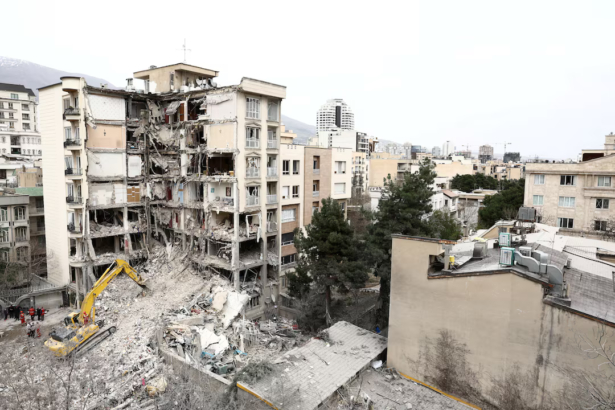
Despite these strikes, hostilities continue. Iran has launched drone and missile attacks against Israel and U.S. allies. The Israeli military reported additional strikes on Iranian shipyards and construction facilities. Iran’s semi-official SNN News Agency reported damage to a residential area in Tehran, where rescue teams are searching for survivors. Kuwait and Saudi Arabia also reported repelling drone attacks.
Reports of the U.S. proposal initially caused optimism in global markets. Equity markets rose and oil prices fell, as investors hoped for a resolution to a conflict that has disrupted energy supplies and contributed to inflationary pressures.
The Pentagon is reportedly sending thousands of airborne troops to the Gulf to expand military options, in addition to two Marine contingents already en route. The first unit aboard an amphibious assault ship is expected to arrive around the end of the month.
Iran has warned it could open a new front at the Red Sea. A military source told the semi-official Tasnim news agency that Iran has the capability to threaten the Bab al-Mandab Strait, a key maritime chokepoint between Yemen and Djibouti.
Iranian Parliament Speaker Mohammad Baqer Qalibaf added that Iran could strike any neighboring country cooperating with efforts to occupy its islands.
We welcome your contributions! Submit your blogs, opinion pieces, press releases, news story pitches, and news features to opinion@minutemirror.com.pk and minutemirrormail@gmail.com