

Summary
- The Iran women’s national team has become the focal point of an international debate as they refused to sing the national anthem during the AFC Women’s Asian Cup 2026 in Australia.
- The team’s refusal to sing the national anthem before their opening match against South Korea was severely criticized by Iran state media, calling it “the pinnacle of dishonour.” The team’s commentator, Mohammad Reza Shahbazi, went so far as to call them “traitors during wartime” and called for severe punishment.
- The team received severe criticism from their own fans during their last match as they waved pre-1979 flags and booed their national anthem.
The Iran women’s national team has become the focal point of an international debate as they refused to sing the national anthem during the AFC Women’s Asian Cup 2026 in Australia. FIFPRO, the international union of footballers, raised serious concerns about the team’s safety on Monday as they prepared to return home amidst severe criticism from state media and growing safety concerns.
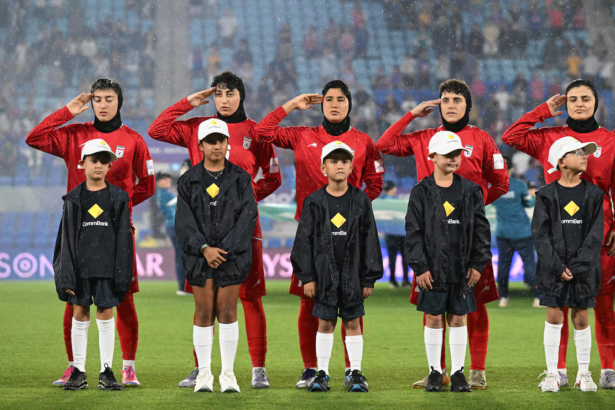
The team’s campaign in the Gold Coast area was marred by increasing geopolitical tensions, including air strikes from the U.S. and Israel in Iran. The team’s refusal to sing the national anthem before their opening match against South Korea was severely criticized by Iran state media, calling it “the pinnacle of dishonour.” The team’s commentator, Mohammad Reza Shahbazi, went so far as to call them “traitors during wartime” and called for severe punishment. The team was eliminated from the tournament with a 2-0 loss to the Philippines. The team received severe criticism from their own fans during their last match as they waved pre-1979 flags and booed their national anthem. The team’s coach was surrounded by the audience and booed as they chanted “Save our girls!” The Australian government was asked not to allow the team to leave the country in a petition signed by more than 66,000 people.

According to Beau Busch, the president of FIFPRO in Asia and Oceania, the organization has not been able to contact the players regarding the plans or the asylum situation in Australia. “The reality right now is that we can’t get in touch with the players. That’s incredibly worrying,” Busch declared before the media. However, FIFPRO is working in collaboration with FIFA, the Asian Football Confederation, and the Australian government to apply maximum pressure to ensure the safety of the team and the right of the players to make their own decisions.

Coach Marziyeh Jafari, an Iranian, has mentioned that the players wish to return to Iran but face difficulties in doing so because of the airspace closures in the Middle East region. As for the asylum situation, it has not been cleared. However, the situation has been further complicated by the fact that the players might have been coerced into action during the games, especially during the singing of the national anthem and the pre-game salute in the second match against Australia. As the specter of safety concerns, rising political pressure, and public scrutiny reaches a boiling point, the Iranian women’s soccer team is at the crossroads where athletes are subject to the pressure of the authoritarian state at the global stage.
The team remains in the global spotlight as FIFPRO and other entities work towards ensuring their safety, autonomy, and freedom in the midst of a global crisis in the realms of sports and human rights unlike any other.
We welcome your contributions! Submit your blogs, opinion pieces, press releases, news story pitches, and news features to opinion@minutemirror.com.pk and minutemirrormail@gmail.com