
Summary
- Iran faced a surge of attacks on Tuesday as the deadline set by US President Donald Trump to reopen the Strait of Hormuz drew closer.
- In a social media post, he demanded Iran “open the strait” or face “hell.” At a press conference, he promised to decimate every bridge and power plant in the country.
- Iran insisted on control of the strait and compensation for damages, while Trump threatened unprecedented destruction.
Iran faced a surge of attacks on Tuesday as the deadline set by US President Donald Trump to reopen the Strait of Hormuz drew closer. Trump warned that he would unleash destruction on Iran’s civilian infrastructure if Tehran refused to lift its blockade of Gulf oil shipments.
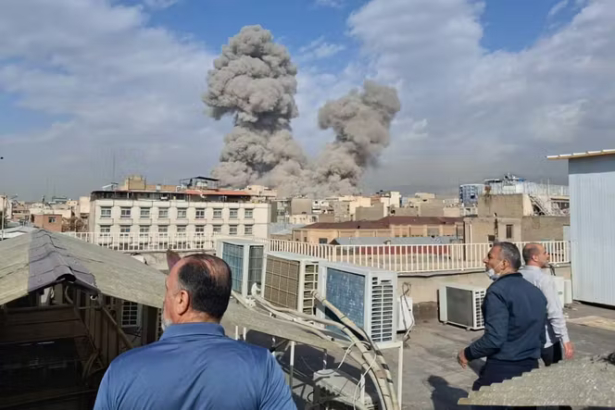
Throughout the day, strikes hit railway bridges, highways, an airport, and a petrochemical plant. Iranian media reported power outages in Karaj after transmission lines and a substation came under fire. Explosions also shook Kharg Island, the country’s main oil export terminal, which Trump previously threatened to destroy or seize.
Iran responded defiantly. Officials announced that they would no longer restrain themselves from targeting infrastructure in neighboring Gulf states. Tehran claimed responsibility for attacks on a ship in the Gulf and Saudi industrial facilities linked to US companies. The Revolutionary Guards declared that America and its allies would be deprived of oil and gas for years if the confrontation continued.
Diplomatic efforts faltered. A senior Iranian source confirmed that Tehran rejected a proposal for a temporary ceasefire conveyed through intermediaries. Iran demanded a permanent end to strikes, guarantees against future attacks, and compensation for damages before any talks could begin. The source insisted that any settlement must leave Iran in control of the strait, with authority to impose fees on passing ships.
Trump’s ultimatum set a clear deadline: reopen the strait by 8 p.m. Washington time or face the destruction of every bridge and power plant in Iran within four hours. Iranian leaders vowed retaliation against US allies, warning that Gulf cities dependent on power and water supplies would become uninhabitable.
Markets remained frozen as investors hesitated to predict whether Trump would follow through on his threats or back down, as he has done in previous confrontations.
Israel added to the tension by warning Iranians in a Persian-language post to avoid trains. Iranian officials accused Israel of striking a synagogue in Tehran overnight, showing footage of Hebrew texts scattered in the rubble. Homayoun Sameh, a lawmaker representing Iran’s Jewish community, said Torah scrolls lay buried under debris. Israel’s military offered no immediate comment.
Inside Iran, citizens expressed fear and uncertainty. “I hope it is another bluff by Trump,” said Shima, a 37-year-old from Isfahan. She voiced frustration with the clerical government but worried that the destruction of infrastructure would cripple the country’s future.
Pakistan continued efforts to mediate. Iran’s ambassador in Islamabad described the talks as “positive and productive” but admitted they had reached a critical stage. A proposal under discussion would lift Iran’s blockade temporarily while postponing a broader peace settlement. However, Iran’s official response demanded far more, including the lifting of sanctions and reconstruction of damaged sites.
The Strait of Hormuz, once an open international waterway, remains effectively closed to foreign shipping since US and Israeli strikes began in late February. Nearly one fifth of global oil and liquefied natural gas usually passes through the strait, making its closure a major global concern.
Trump’s rhetoric grew harsher as the deadline approached. In a social media post, he demanded Iran “open the strait” or face “hell.” At a press conference, he promised to decimate every bridge and power plant in the country. Iranian officials condemned the threats as incitement to terrorism and evidence of intent to commit war crimes. Military leaders dismissed Trump as delusional.
With both sides entrenched, the prospect of escalation loomed large. Iran insisted on control of the strait and compensation for damages, while Trump threatened unprecedented destruction. The world watched anxiously, uncertain whether diplomacy could avert a wider war.
We welcome your contributions! Submit your blogs, opinion pieces, press releases, news story pitches, and news features to opinion@minutemirror.com.pk and minutemirrormail@gmail.com